
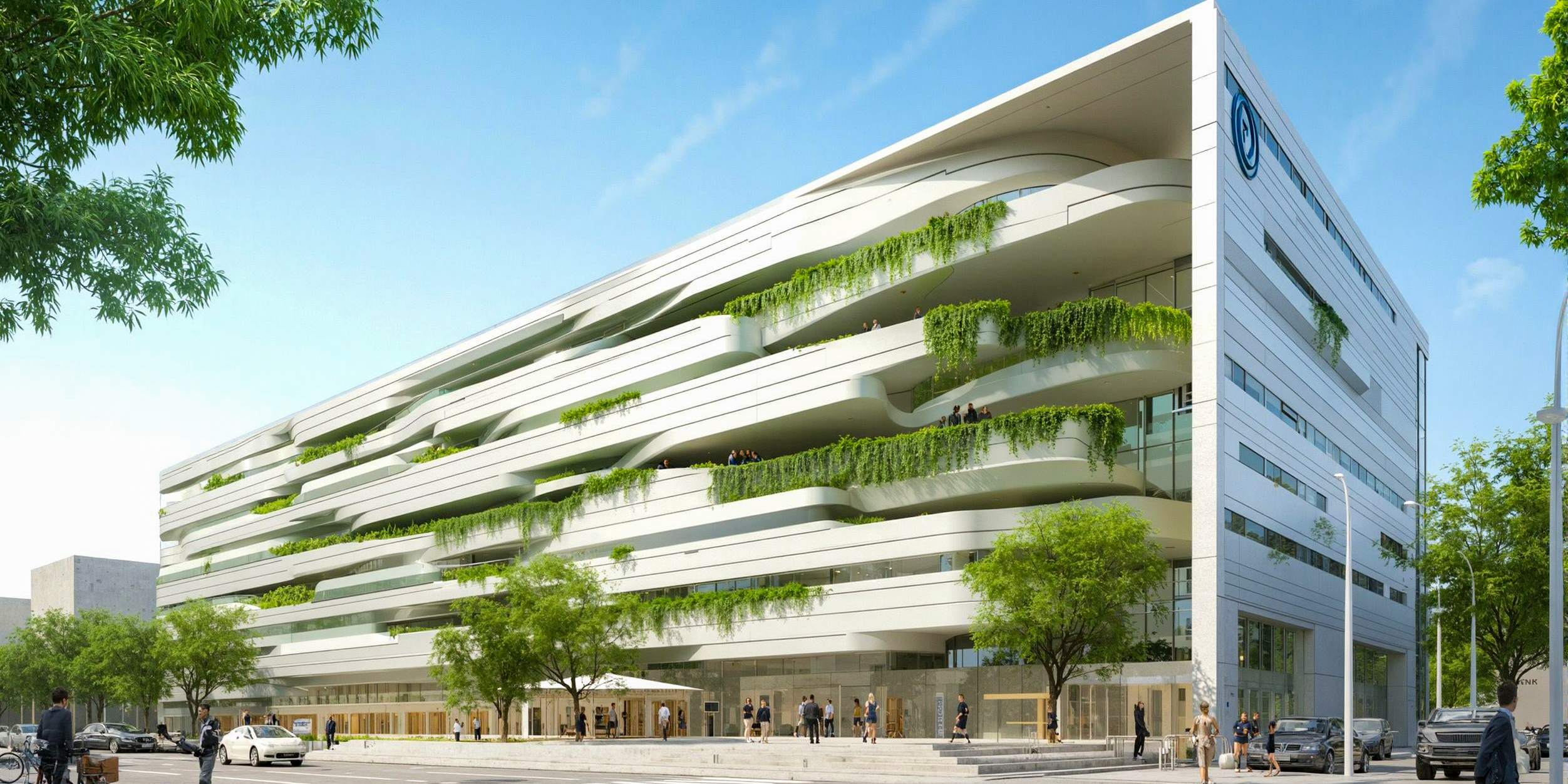
Rendering at the Speed of Creativity
Every great design begins with a sketch, a plan, or a spark of imagination. But for decades, architects and designers had to spend hours — sometimes days — turning those ideas into polished visual renderings.
In 2025, AI rendering tools are changing the game. What once took days now takes minutes. Floor plans, sketches, and BIM models can be transformed into stunning, photorealistic visuals instantly.
With so many tools available, how do you decide which ones to use? Here’s a look at the top 5 AI rendering tools every architect and designer should know in 2025.
1. Chaos Vantage – Real-Time Photorealism
Chaos Vantage, developed by the makers of V-Ray, is an AI-powered rendering engine that allows architects to explore massive 3D scenes in real time. With ray-traced accuracy and automatic optimization, designers can view complex models at full quality without manual setup.
Where it shines:
- Handles ultra-complex BIM and 3D files effortlessly
- Ray-traced, photoreal outputs in real time
- Ideal for cinematic-quality visualizations
Best for: Architecture firms working on large-scale, detail-heavy projects.
2. Enscape – Instant VR Walkthroughs
Enscape integrates directly with design software like Revit, SketchUp, Rhino, ArchiCAD, and Vectorworks. It delivers real-time rendering, lighting, and immersive VR experiences with just one click.
Where it shines:
- Seamless integration with leading design platforms
- One-click VR walkthroughs for client engagement
- AI-enhanced lighting and materials
Best for: Firms needing rapid design reviews and immersive presentations.
3. Twinmotion – Storytelling with Unreal Engine
Twinmotion, powered by Epic Games’ Unreal Engine, brings cinematic storytelling to architectural visualization. It uses AI-assisted features like dynamic vegetation, weather, and crowds to bring designs to life.
Where it shines:
- Real-time rendering with cinematic effects
- Simple, intuitive interface
- Ideal for master plans, urban design, and public projects
Best for: Urban planners and designers needing presentation impact.
4. D5 Render – Fast and Intuitive
D5 Render is becoming a favorite among architects and interior designers due to its speed and simplicity. With AI denoising, GPU acceleration, and real-time global illumination, it produces high-quality images and animations quickly.
Where it shines:
- Extremely fast rendering with AI support
- Large built-in asset library
- Streamlined workflow for small studios
Best for: Interior designers and smaller studios needing fast quality.
5. Veras – AI Inside Revit
Veras is an AI-powered plug-in for Revit and Rhino, designed to generate visual variations directly inside BIM workflows. It removes the need for exporting models to external software.
Where it shines:
- Built directly for Revit and Rhino
- Generates design variations instantly
- Accelerates early concept development
Best for: Revit-focused firms wanting AI inside their everyday workflow.
Bonus: Emerging AI Platforms to Watch
While the above tools focus on rendering, AI design platforms are expanding what’s possible.
AIRIlab is one such platform — built specifically for architecture, interior design, landscape, and urban planning. Unlike general image-generation tools, it understands proportion, space, and architectural rules.
Key highlights of AIRIlab:
- Transforms sketches and plans into styled visual previews
- Refinement tools like inpainting, upscaling, and atmosphere control
- Image-to-video conversion for presentations
- Built for enterprise: security and IP protection
Why it matters: AIRIlab isn’t just about rendering — it’s a broader AI design assistant spanning interiors to city planning.
Choosing the Right Tool in 2025
Each AI rendering tool has unique strengths. The right choice depends on your workflow:
- Chaos Vantage → High-end photorealism
- Enscape → Immersive VR & walkthroughs
- Twinmotion → Cinematic urban storytelling
- D5 Render → Speed + simplicity for interiors
- Veras → BIM-integrated AI variations
- AIRIlab → Beyond rendering; multi-scale AI design support
These tools don’t replace one another — many firms combine multiple depending on project needs.
Final Thoughts – AI as a Creative Partner
The rise of AI in rendering and design isn’t about replacing architects — it’s about amplifying creativity. Tools like Chaos Vantage, Enscape, Twinmotion, D5 Render, and Veras make rendering faster and more interactive.
Meanwhile, platforms like AIRIlab expand the workflow by fusing rendering with design intelligence and urban-scale understanding.
Together, these tools are transforming the way architects and designers work — making 2025 the year AI becomes an essential creative partner in the built environment.