
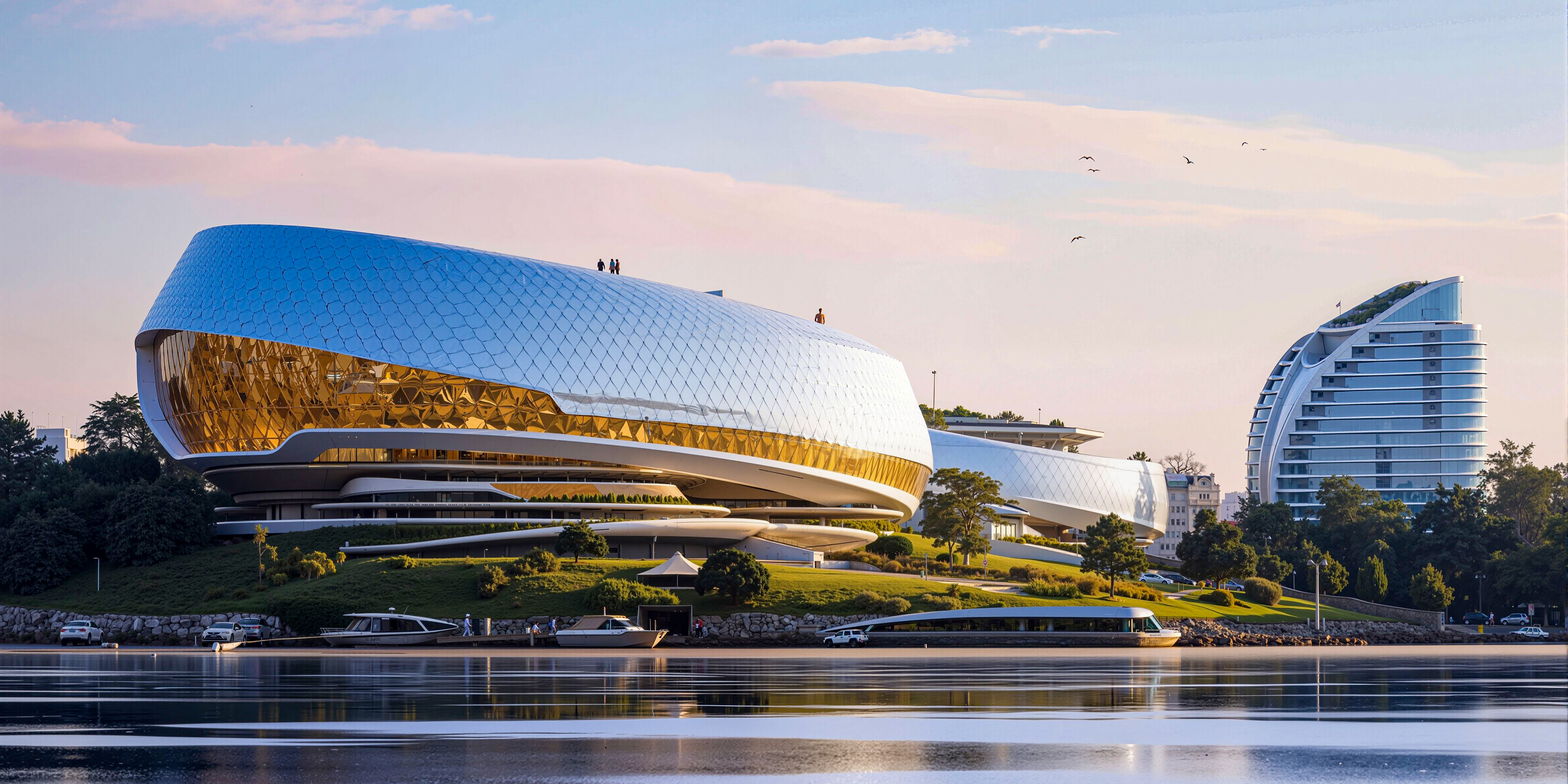
When technology understands design, presentation becomes storytelling.
Every architect remembers the first time they had to “sell” an idea. A sketch pinned to a board. A client leaning forward, trying to picture sunlight and texture in a flat image.
That moment — the bridge between imagination and understanding — is what defines architectural presentation.
Today, that bridge is changing shape. As digital tools become faster, more intelligent, and more intuitive, presentation is no longer a separate stage in the design process. It’s integrated, interactive, and immediate.
Platforms like AIRIlab — built by architects, for architects — are helping designers present ideas not as static visuals, but as living experiences that evolve with every decision.
1. From Boards to Live Experiences
In the past, architects told stories through foam models, printed boards, and 3D renders that took hours — sometimes days — to finalize. Those formats had beauty, but they also had friction. By the time a render was ready, the conversation had already moved on.
AIRIlab changes that tempo completely. Because it’s browser-based, projects open directly online — no installations, no hardware bottlenecks. Design teams and clients can log in, review, and refine together.
A presentation that once meant a slideshow is now a shared environment. Designers can respond to feedback on the spot — adjusting lighting, refining materials, regenerating visuals — while everyone watches the design come to life.
That agility gives clients something priceless: inclusion.
2. The New Speed of Storytelling
Architecture thrives on iteration, but traditional rendering has never been fast enough to keep up with the pace of design discussions.
AI-assisted visualization changes that equation. With AIRIlab’s rendering system, architects can produce presentation-quality images in a fraction of the usual time — realistic enough to communicate atmosphere, flexible enough to evolve mid-meeting.
Imagine reviewing a concept with a developer and being able to say, “Let’s see it with softer light,” or “What if this facade were timber instead of glass?” — and having that visual updated within minutes.
Speed no longer sacrifices quality; it amplifies it. It turns feedback into dialogue and decision-making into design.
3. Designing Atmosphere, Not Just Geometry
What makes people fall in love with architecture isn’t the floor plan — it’s the feeling. The way morning light moves through a corridor, or how reflections shimmer on a pool at dusk.
Through AIRIlab’s Atmosphere Swift, designers can manipulate tone, time of day, and color temperature to convey these subtleties instantly.
Whether it’s a soft overcast mood for a museum or the golden warmth of evening for a hospitality project, atmosphere defines emotion — and emotion is what makes presentations memorable.
These lighting variations don’t simulate weather; they capture experience. They let clients feel the intent behind the design rather than being told what to imagine.
4. The Fine Art of Refinement
Even a near-perfect render can need last-minute tuning — a reflection too sharp, a shadow too dark, a surface slightly overexposed. In the past, that meant waiting hours for a full re-render.
Now, Smart Edit changes everything. Designers can make quick, localized adjustments to specific areas of an image: tone down glare on glass, brighten interior lighting, enhance vegetation — all within seconds.
That micro-precision saves enormous time in pre-presentation workflows. More importantly, it ensures that visuals always stay aligned with design intent. The architect doesn’t hand off imagery to a technician; the architect stays the storyteller.
5. Collaboration as Presentation
Design today is rarely a solo act. A single project often involves architects, interior designers, landscape consultants, and visualization specialists across multiple cities.
AIRIlab’s cloud-based workspace brings them together seamlessly. Teams can upload, edit, and comment in real time — seeing the same image evolve collectively.
A lighting designer adjusts tone in Dubai. An architect tests façade variations in London. A landscape consultant adds greenery in Singapore. No version confusion, no massive file transfers — just one synchronized vision.
When everyone sees the same thing, alignment becomes natural. That collaborative transparency also makes presentations to clients smoother: the visuals have already been validated by every discipline behind the project.
6. Realism With Purpose
There was a time when hyper-realistic visuals risked becoming misleading — too perfect, too cinematic, too far from construction reality.
AIRIlab’s strength lies in its balance between precision and honesty. Its AI-driven visuals retain architectural realism — materials behave as they should, light acts naturally — but they also remain true to design scale and context.
What clients see is not an artistic exaggeration but a believable impression of what will be built. That integrity builds confidence. It assures decision-makers that the visual matches the vision — not a marketing render, but a real design story told clearly.
7. Sustainability, Simplified Visually
The discussion around sustainability often gets lost in technical language — energy coefficients, solar factors, or thermal loads. Yet architecture communicates sustainability most powerfully through visuals.
By controlling light, vegetation, and texture within AIRIlab’s render suite, designers can express passive-cooling ideas, shading logic, and natural ventilation effects without adding complex data overlays.
Clients can see comfort: shaded courtyards, permeable pathways, daylight-balanced interiors. It’s sustainability made visible — and therefore, understandable.
8. Evolving the Client Experience
Clients today expect clarity and pace. They want to see options, not promises. AIRIlab empowers architects to deliver that with confidence.
During live presentations, visuals can shift fluidly — materials swapped, daylight altered, atmosphere refined. This dynamic exchange turns the meeting itself into an act of design.
Clients leave not just convinced by the outcome, but impressed by the process. The experience feels alive, co-authored, and transparent — which is exactly what modern architecture communication should be.
9. The Future: Storytelling Through Simplicity
Presentation technology is evolving fast, but the principle behind it stays timeless: storytelling.
AIRIlab’s success lies in helping architects tell their stories simply — with less friction, less waiting, and more focus on what matters most: meaning.
As tools become more intelligent, presentation will continue moving closer to conversation — where architects and clients share ideas through immediate imagery rather than static documents.
In that sense, “next-gen presentation” isn’t about showing more — it’s about showing better. Clearer. Quicker. Truer.
10. Why AIRIlab Fits the New Era
Because it’s built around the architect’s workflow, not outside it. AIRIlab doesn’t ask designers to change how they think — it simply accelerates how they express.
AI rendering compresses production time. Atmosphere Swift creates visual emotion. Smart Edit delivers micro-control. Browser-based collaboration ensures accessibility anywhere. 4K output provides clarity for presentation boards and screens alike.
Together, these strengths make AIRIlab more than a rendering tool — it’s a communication platform for the visual language of design.
Conclusion
Presentation is where architecture becomes understandable — where an idea meets the imagination of others.
The next generation of architects isn’t defined by faster computers or flashier visuals; it’s defined by the ability to share ideas effortlessly and honestly.
With tools like AIRIlab, architects and designers can turn their concepts into experiences that clients and collaborators can feel — immediate, refined, and unmistakably human.
Because the future of presentation isn’t about technology replacing craft. It’s about technology finally speaking the language of design.