
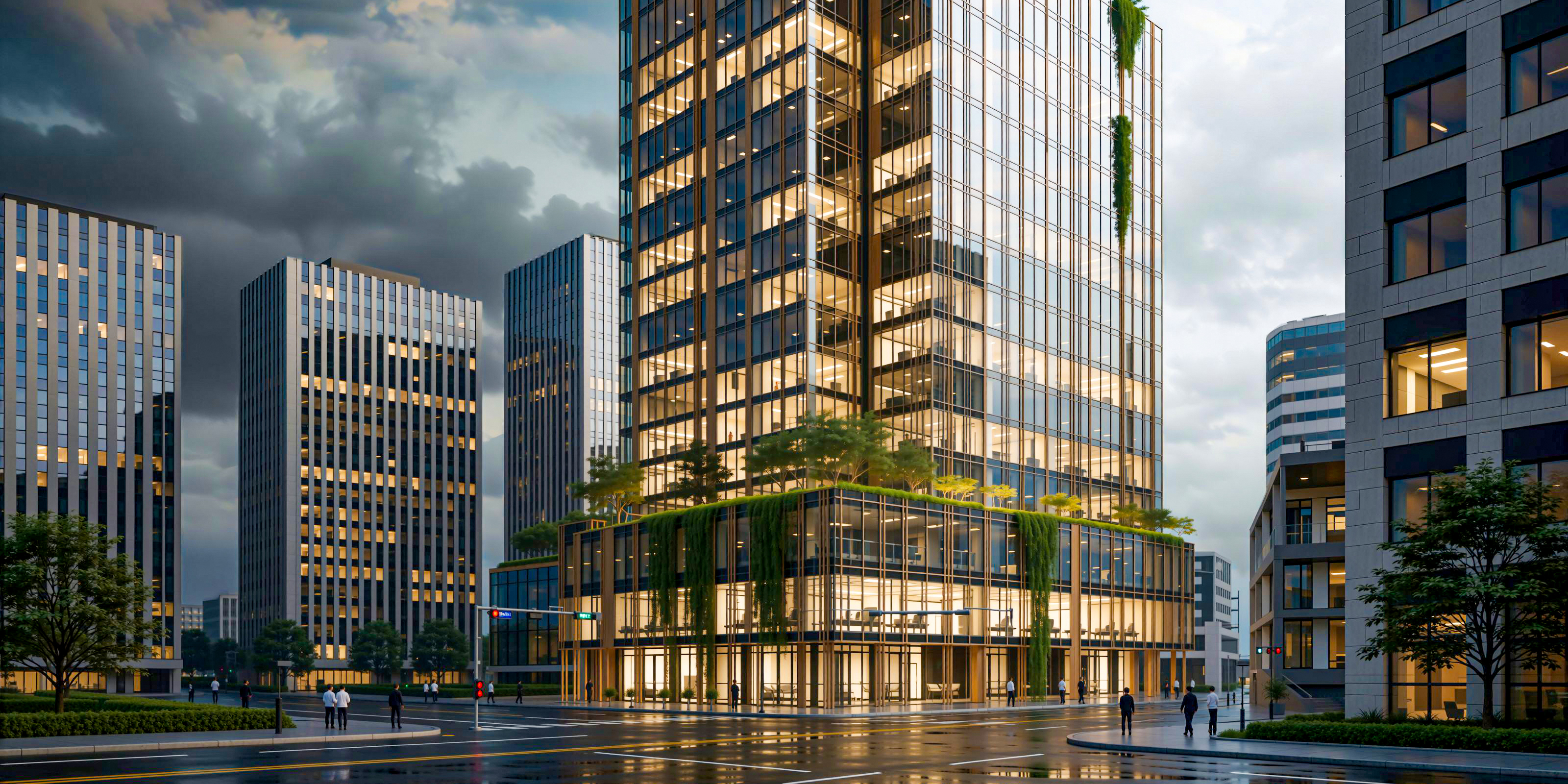
In the modern studio, architects no longer have the luxury of time. Clients expect visual impact from the very first concept presentation, and every iteration must feel closer to reality. That pressure has turned architectural visualization into one of the most vital parts of the design process — not an afterthought, but the language of persuasion.
AIRIlab’s Render • Refine • Realize workflow reimagines how design teams create, enhance, and deliver photoreal architecture. Powered by intelligent, design-specific AI systems, this approach lets you move from sketches to 4K architectural renderings with precision, speed, and consistency — all while keeping creative control firmly in the architect’s hands.
From Sketch to Scene: The Rise of AI-Driven Architecture Workflows
Every design begins with intent — a form, a feeling, a spatial story. Traditionally, translating that into a compelling visual required hours of manual modeling, texturing, and lighting adjustments. With AIRIlab’s AI architecture workflow, that creative gap collapses into a smooth, iterative loop.
Instead of replacing designers, AI acts as an accelerator. It interprets proportions, materiality, and spatial depth the way architects think, transforming a conceptual sketch or moodboard into an early visualization that already feels close to the final outcome. The result is less time waiting for renders and more time refining design decisions.
1. Render - Laying the Foundation for Realism
The first step, Render, begins with intent — a site sketch, volumetric model, or even a few written cues about materials and lighting. Within moments, AIRIlab’s generative models analyze spatial relationships and produce multiple high-fidelity renders that preserve design hierarchy and composition.
These aren’t just pretty pictures; they’re intelligent bases that understand architecture. You can explore several compositions at once, assess daylight, balance façade rhythms, and test spatial proportions without building full models. Each render becomes a design hypothesis — a visual prototype ready for evolution.
This early automation doesn’t replace architectural thinking; it accelerates it. The designer still defines vision and atmosphere — AI simply removes the repetitive labor of starting from scratch.
2. Refine - Intelligent Iteration at the Speed of Thought
Once the foundation is set, the Refine phase allows precision adjustments. Instead of re-rendering an entire scene, you update the areas that matter — materials, lighting, or detailing — and let AI handle the rest.
Want to swap a stone façade for corten steel? Adjust glass reflections? Shift shadows toward golden hour? A single masked edit and instruction is enough. AIRIlab understands spatial context, preserving geometry, perspective, and lighting balance.
Because AIRIlab’s engine is trained on architectural datasets, refinements maintain realism and proportional consistency. This mirrors real studio workflows — test, review, adjust, repeat — but with iteration cycles that happen in seconds instead of overnight.
3. Realize - From Vision to Presentation
In the final step, Realize, your design reaches full expression. This phase focuses on visual storytelling — context, atmosphere, and emotion fused into a photoreal final render.
Add people, vegetation, signage, or real site context. Adjust tone curves or export multiple lighting scenarios. With consistent, upscalable outputs, AIRIlab delivers crisp 4K and even 8K imagery suitable for competitions, investor decks, marketing, or client presentations.
What once took weeks of rendering cycles can now be completed in an afternoon of creative refinement.
How the Workflow Changes Design Practice
- Fluid ideation — Instant visualization encourages deeper exploration.
- Unified tools — No switching between rendering engines and editing apps.
- Collaborative clarity — Real-time iteration supports team co-design.
- Client confidence — Early photoreal outputs improve feedback quality.
- Consistent storytelling — A cohesive visual language across projects.
What once felt like a production task now becomes part of conceptual design — bridging creativity and delivery.
Example: From Massing to Masterpiece
Imagine a firm working on a mixed-use urban project. The lead designer begins with a Rhino massing model and a few material cues — concrete base, timber screens, bronze accents. Within minutes, AIRIlab generates four base visuals under different daylight moods.
The team selects one, refines the podium with vertical fins, adds green terraces above, and shifts the lighting toward evening warmth.
By afternoon, the final 4K render is complete — including people, reflections, and contextual surroundings. No heavy post-processing. No render queues. Just a crisp, high-impact visual ready to communicate the architecture.
Architectural Intelligence in Action
What makes this system unique is that AIRIlab is not built on generic image algorithms. Its AI understands how material, light, and space interact — the rhythm of façades, structural logic, shadow behavior, and reflections across glass and water.
This intelligence produces predictable, precise outputs that studios rely on for client presentations and competition submissions.
The workflow also supports collaboration through shared style libraries and templates, enabling consistent aesthetics across design teams.
A Balanced View: The Human Touch Still Matters
While the advantages are clear, AIRIlab is transparent about one truth: AI is not here to replace architects. It is a co-designer that thrives alongside human judgment.
Geometry, documentation, and narrative still require human creativity. The AI workflow handles labor-intensive visualization so designers can focus on innovation and storytelling.
Looking Ahead: The Future of Design Visualization
As computational design and AI merge, the next frontier will be connected ecosystems — where visualization, simulation, and design data flow together.
Future AIRIlab updates aim to integrate environmental simulation, contextual modeling, and automated presentation decks — creating outputs that deliver both beauty and analytical depth.
For now, Render • Refine • Realize offers a powerful glimpse of that future.
Conclusion
In the race between creativity and deadlines, AIRIlab gives architects a vital advantage. It transforms visualization into a real-time creative dialogue — where every render becomes part of the story, every refinement moves the idea forward, and every realization becomes a compelling vision ready for the world.
Whether you're shaping a concept sketch, exploring façade options, or crafting a competition entry, the Render • Refine • Realize workflow helps you deliver faster, smarter, and with the visual depth modern clients demand.